The Value Inside a Holding Company Is Clear. The Challenge Is Unlocking It.
Dec 9, 2025
Holding companies possess something few organizations in the professional services world can match. They oversee expansive portfolios of agencies and consultancies, each with distinctive strengths, specialized expertise, and rich client experience. On paper, this creates an unparalleled competitive advantage. A holding company should be the most capable partner for any client, across any industry, at any stage of their journey.
Yet leaders across these organizations often see a different picture. Capabilities are abundant, but rarely coordinated. Agencies within the same group may not know each other’s strengths. Talent sits in silos, partnerships form informally, and opportunities flow unevenly across the network. Holding companies frequently hold more potential than they can activate.
The problem is not that value is missing. It is that value is locked in pockets across the organization, scattered across teams, brands, departments, and geographies. The holding company becomes a collection of strong entities rather than a unified ecosystem.
The next era requires something different. It requires turning the network into a strategic asset that accelerates collaboration, strengthens pitches, and expands the collective capability of the group.
When Scale Becomes a Strength and a Structural Limitation
Holding companies are built on scale. They have reach, reputation, and the ability to support clients in ways independent agencies cannot. But scale also introduces complexity that makes collaboration difficult.
Capabilities become distributed across multiple agencies. Each agency has deep expertise, yet leaders struggle to maintain visibility into what exists across the portfolio.
Partner relationships develop in isolation. Agencies forge outside partnerships based on immediate needs, often without alignment to the broader group strategy.
Talent information remains fragmented. Knowledge about skills, availability, and past work rarely exists in a centralized, accessible system.
Opportunity flow lacks structure. Some agencies receive consistent referrals while others remain disconnected from the group’s broader pipeline.
Cross-agency collaboration depends on personal relationships rather than organizational design.
These challenges are not signs of inefficiency. They reflect the complexity of large, multi-entity portfolios. But they also reveal why so much opportunity remains unclaimed.
Why Holding Companies Need a More Connected Way to Grow
Modern clients seek partners who can bring breadth, depth, and proven experience across diverse disciplines. They want strategic thinking combined with executional excellence. They want a single relationship that can bridge multiple needs. In theory, holding companies are built to deliver exactly that.
However, when agencies inside a group cannot easily collaborate, the client rarely experiences the full value of the network.
Holding companies are beginning to rethink how growth should work. Instead of relying on each agency to operate independently, leaders are moving toward models that support shared opportunity, cross-functional collaboration, and unified delivery experiences.
A connected ecosystem offers several advantages.
More integrated offerings. Agencies can combine their specialized capabilities to create comprehensive, high-value solutions.
Stronger pitches. Cross-agency collaboration increases credibility, case history, and competitive differentiation.
Better utilization of portfolio-wide talent. Teams gain access to the right people at the right time, regardless of where they sit in the organization.
Greater resilience. When one agency experiences a slow period, others within the group can offset demand through shared opportunity.
Higher enterprise value. The network becomes more valuable than the sum of its agencies.
For holding companies, connection is no longer a luxury. It is a strategic requirement.
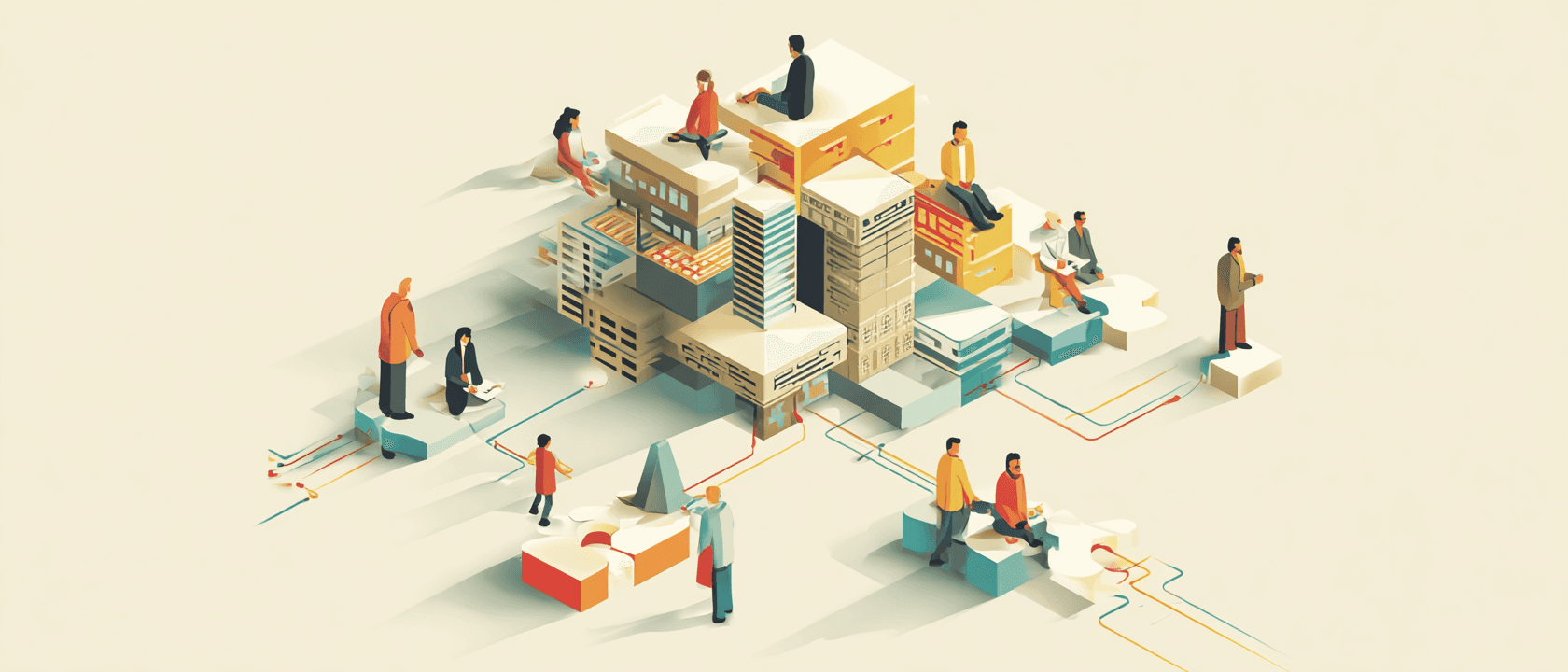
What a Unified Agency Network Looks Like
A well-connected holding company does not rely on chance interactions or individual relationships. It builds systems that allow collaboration to happen naturally across the organization.
Teams have a clear, transparent view of capabilities across all agencies.
Talent is documented in a centralized environment so leaders know where expertise exists and how to access it.
Partnership opportunities are shared consistently, not selectively, ensuring that no agency is overlooked.
Cross-agency teams assemble quickly when a pitch or project requires multiple disciplines.
Collaboration is guided by clear processes rather than informal communication.
The holding company becomes a true ecosystem where each agency strengthens the others.
When this structure is in place, the entire portfolio becomes more competitive. The holding company begins to operate as a single strategic entity rather than a loose collection of brands.
How Collective OS Helps Holding Companies Activate Their Potential
Collective OS provides the infrastructure holding companies need to manage and mobilize their networks in a coordinated, strategic way.
The platform creates a unified environment where agencies across the portfolio can document their specialties, case studies, teams, and capabilities. This transparency allows leaders and delivery teams to identify the right expertise quickly.
Opportunities can be shared across selected groups of agencies, ensuring that pitches and projects reach the teams best suited for them. Agencies can collaborate on proposals, co-deliver engagements, and build shared case histories that strengthen future work.
Collective OS also helps holding companies maintain visibility into network health. Leadership can understand which collaborations are producing value, how often agencies are working together, and where the ecosystem needs support or refinement.
It is not simply a tool for collaboration. It is an operating system for turning a multi-agency portfolio into a unified, opportunity-generating network.
The Holding Companies That Will Lead the Future Are Those That Build Connectivity Into Their Core
Scale is no longer enough. Clients expect integration, flexibility, and depth. Agencies within a holding company expect a more seamless way to share resources and opportunities. The organization itself needs a new operating model that supports coordinated growth.
The firms that will define the next generation of holding companies are already investing in systems that bring visibility, alignment, and collaboration into one place. They are creating environments where agencies do not just coexist. They work together, win together, and grow together.
The path forward is clear. Holding companies must become ecosystems. And the ones that succeed will unlock advantages that independent agencies cannot match.
The future belongs to organizations that harness the strength of the collective.